Exotic Visitor
Some folk might consider January a dull time for wildlife and birds – after all, some creatures, such as bats, are hibernating, some have long since departed for warmer climes and others have chosen to winter on our estuaries. Thankfully others have decided to join us from areas even colder than ours; in fact, as I have mentioned in previous blogs, many birds do just that. The most spectacular however may well be on its way now, in fact it might even be here now. The bird, the Supermarket Bird, known and loved by all birders as the waxwing, is surely one of our most exotic visitors.
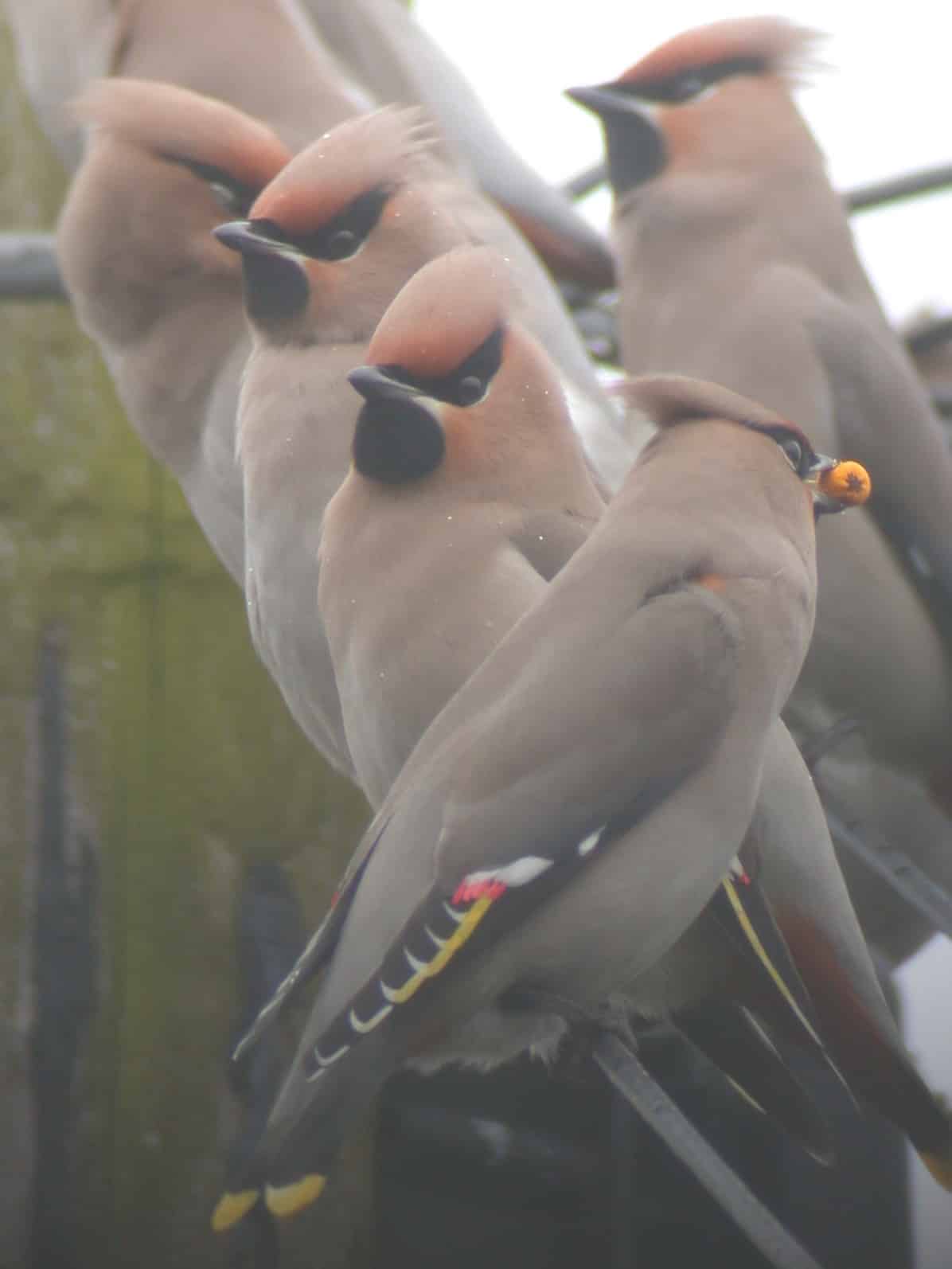 These delightful birds are so called because they have a small patch of red on their wings which is the same colour as the wax used, in days gone by, to seal letters. You need to be pretty close up to see this mark, but fortunately the waxwing can be reasonably confiding, although like most wild animals there is a limit to how close you can get and keeping quiet and moving slowly really does help. Why Supermarket Bird? Well they will happily feed on cotoneaster, pyracanthus and viburnum berries and these plants, as exotic as the waxwing, are often planted in supermarket car parks, presumably because they need little care, after all gardening costs money and affects profitability. More often found in flocks than as singletons, look out for a starling-sized bird, in fact at this time of year check out all starling flocks just in case. They are brown and pale grey with silky plumage, a black and white eyestripe, a crest, a square-cut tail and pointed wings. Absolutely gorgeous they are, but I hasten to add at this point not more so than my wife, Jackie, who will be proofreading this article. Waxwing belong to the genus Bombycilla, of which only three species are in the family, the Japanese waxwing (B. japonica), the cedar waxwing (B. Cedrorum) and our own exotic visitor the bohemian waxwing, usually just called waxwing. Bohemian is not really correct, they don’t hail from central Europe, despite it being the old German name for the bird, and it simple denotes something exotic and foreign. In 1555 Gesner called it Garrulus bohemicus, literally Bohemian Jay; in 1678 it was mistranslated by Ray as Bohemian Chatterer, a strange decision because the waxwing is normally mostly silent. After 1816 Vieillot grouped them into a genus of their own and they became waxwing in 1817 (Stephen). Another ancient name for them was silk tail, apparently alluding to their soft plumage.
The number of waxwings to visit us is usually controlled by how cold it is in their breeding places, the Arctic and sub-Arctic regions such as Scandinavia, and the amount of food available for them there. This means that some years we can get an ‘invasion of waxwings’ whilst other years we get many disappointed birders. It seems that these birds get a lot of attention from birders, perhaps even scientists – someone who perhaps ought to get a life observed a waxwing feeding at Avoch in the Moray Firth eating 500 berries, three times its body weight, in six hours. Another bird, in Carmarthenshire, reportedly ate between 600 and 1000 berries in six hours, this caused it to ’empty its bowels every four minutes’ and the result was droppings just as colourful as the berries it had consumed. This of course suggests that they don’t get too many nutrients from berries, hence the need to consume such huge quantities. Maybe gannet would be a better name for them. The normal procedure for waxwings is for them to stay at a food supply until it is exhausted, so if you hear of some on the grapevine get there quickly before they move on and, yes, they really are worth seeing.
Despite their preference for fruit of all kinds, their diet can change. When the circumstances are right they will eat insects which they will both pluck from foliage or even catch in mid-air. We, of course, rarely see this behaviour in this country because there are no insects in winter, although visitors to Scandinavia recall how strange it is to see this behaviour in what we perceive as purely berry-eating birds. The female bird incubates the young, fed by the male, until the eggs hatch when both birds then feed the young. Both sexes look identical.
Nigel Heptinstall (Outdoors2015)
Bibliography:
Birds Britannica – Cocker and Mabey.
The Oxford Book of Bird Names – WB Lockwood

